Introduction
Hiring the right talent is one of the most critical tasks for any organization. Yet, traditional hiring processes often suffer from inherent biases and inconsistencies that can lead to suboptimal outcomes. Structured interviewing is a method that has gained prominence in recent years for its ability to minimize bias and improve consistency throughout the hiring process. In this article, we will explore the concept of structured interviewing, its benefits, and how to implement it effectively.
What is Structured Interviewing?
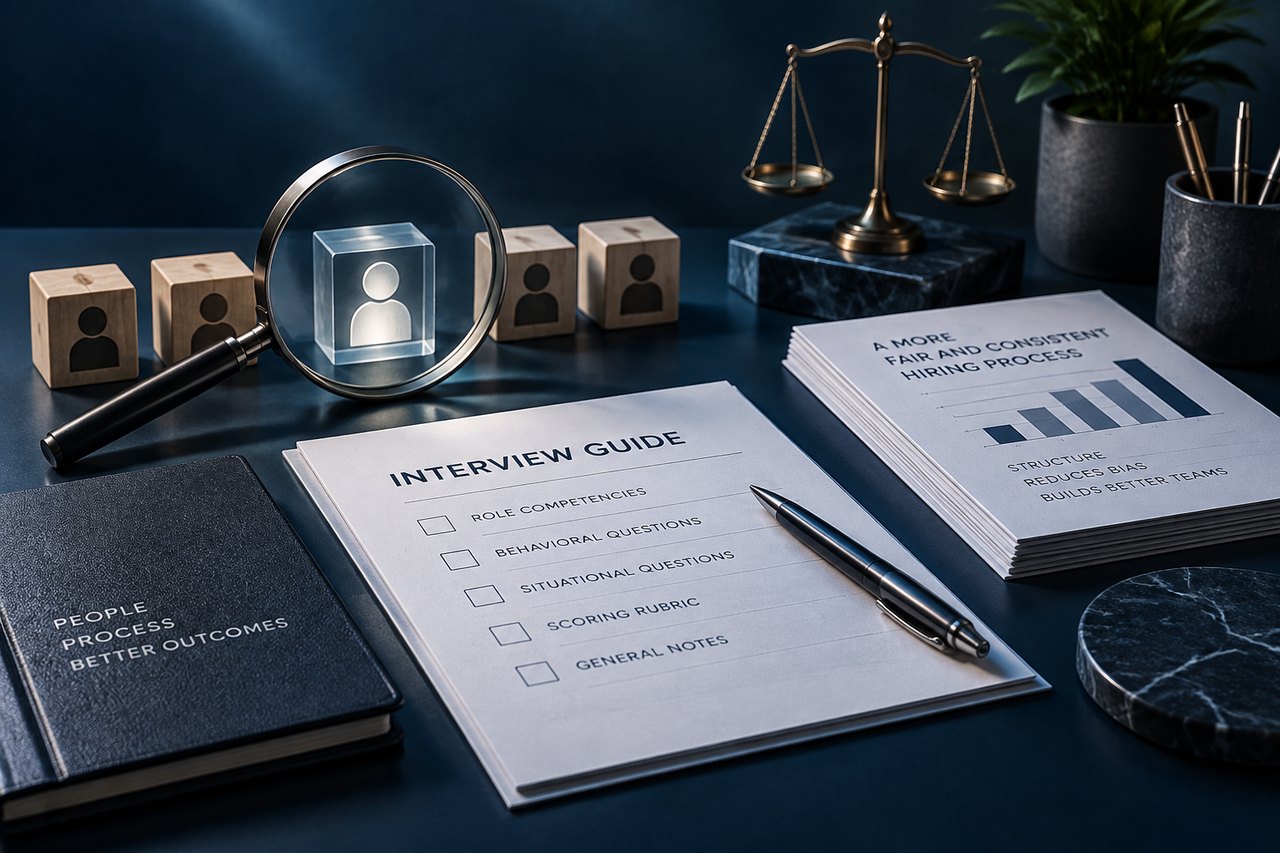
Structured interviewing is an approach to job interviews that aims to make the process as objective and fair as possible. It involves designing interviews with a well-defined set of questions and predetermined evaluation criteria. Unlike unstructured interviews, where questions can vary widely and lack consistency, structured interviews use a standardized format.
Key Components of Structured Interviews
- Standardized Questions: The heart of structured interviewing lies in using a fixed set of questions for all candidates applying for a specific role. These questions are carefully crafted to assess the skills, qualifications, and competencies required for the job.
- Evaluation Criteria: For each question, predefined evaluation criteria are established. Interviewers use these criteria to rate candidates’ responses consistently and objectively. This reduces subjectivity and ensures that all candidates are evaluated on the same basis.
Benefits of Structured Interviewing
- Reduced Bias: One of the primary advantages of structured interviews is their ability to minimize bias in the hiring process. Since all candidates are asked the same questions and evaluated using the same criteria, there is a decreased likelihood of unconscious biases affecting decisions.
- Improved Consistency: Structured interviews enhance consistency across all interviews for a specific role. This consistency ensures that each candidate is given an equal opportunity and that hiring decisions are based on merit.
- Predictive Validity: Research has shown that structured interviews have a higher predictive validity for job performance compared to unstructured interviews. This means that candidates who perform well in structured interviews are more likely to excel in the actual job.
- Legal Compliance: Structured interviewing can help organizations demonstrate fairness and compliance with employment laws, reducing the risk of discrimination-related lawsuits.
Implementing Structured Interviews Effectively
- Job Analysis: Start by conducting a thorough job analysis to understand the specific skills and competencies required for the role. This analysis forms the basis for creating relevant interview questions.
- Question Design: Develop a set of open-ended and behavior-based questions that assess the key qualifications needed for the job. Questions should be clear, concise, and free from any potential biases.
- Evaluation Criteria: Establish clear and measurable evaluation criteria for each question. These criteria should guide interviewers in scoring candidates consistently.
- Training: Train interviewers on the structured interview process, including the use of standardized questions and evaluation criteria. Provide guidance on avoiding bias during interviews.
- Pilot Testing: Before implementing structured interviews company-wide, conduct pilot interviews to fine-tune the questions and evaluation criteria.
- Document and Review: Keep thorough records of interview responses and evaluation scores. Regularly review the effectiveness of the structured interview process and make necessary adjustments.
Conclusion
Structured interviewing is a powerful tool for organizations seeking to reduce bias and improve consistency in their hiring processes. By using standardized questions and evaluation criteria, employers can make more objective and fair hiring decisions. While implementing structured interviews may require initial effort and training, the long-term benefits in terms of hiring quality and legal compliance make it a worthwhile investment for any organization committed to fair and effective talent acquisition.
Thank you for reading my post regarding talent acquisition and retention. I would highly recommend that you complete the diagnostic and take us up on our complimentary two-hour consultation regarding talent acquisition and retention. The diagnostic will help us discover your company’s top three strengths and weaknesses regarding your acquisition and retention systems and processes. The meeting will help you develop a preliminary plan to improve your weaknesses and accentuate your strengths. I guarantee you will get three to four items of significant value out of the complimentary meeting. Here is a link to the diagnostic.
https://www.mindshop.com/main.nsf/diagnosticbus.xsp?id=1ifvptl3r2u4g